
When It’s Time for Hospice
Is Anyone Really Ready for This?

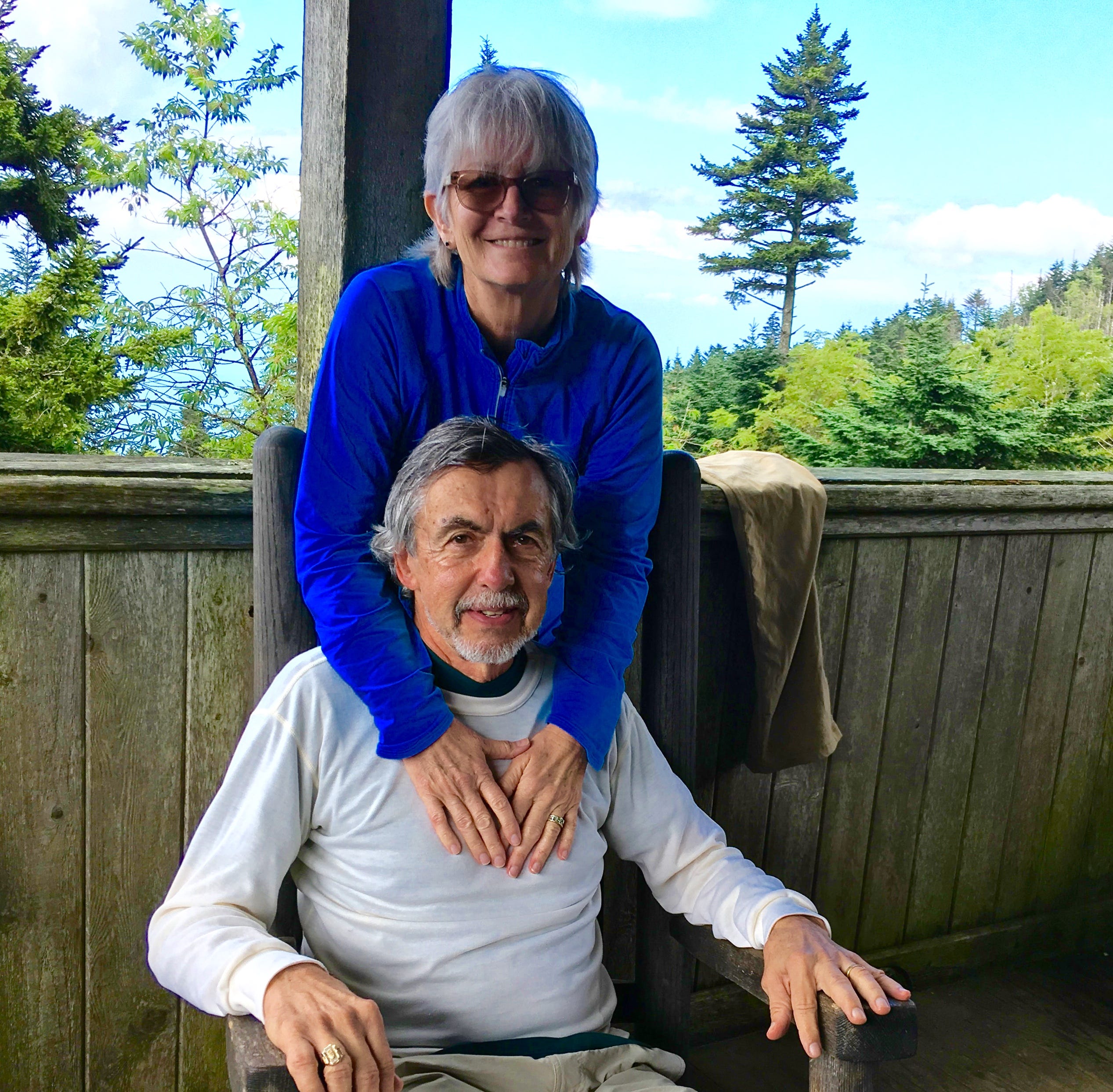
When our Primary Care Physician told me that my husband Walt was ready for hospice, I was in shock. Walt had Alzheimer’s dementia and was in his 7th year post-diagnosis. He was in one of the later stages of dementia (probably Stage 6) but still walked the dog around our circle without assistance (but with discreet supervision), still communicated in a friendly demeanor to our neighbors and infrequent visitors, and was still able to eat and drink on his own (albeit, he couldn’t use utensils).
Walt had always said he didn’t want to live beyond recognizing me, the kids, and himself. He still recognized those of us who were with him frequently, and he retained a sense of himself. For a few months, he had been saying to me that he didn’t think he’d be alive a year from now, and I assumed he didn’t understand the difference between the last stage of dementia (where the brain is going off-line) and the death of the body. I figured we were in for a couple of years of total dependence: bed-bound, incontinent, non-verbal, and needing to be fed (although he had specified in his living will that he did not want to be spoon fed if he couldn’t feed himself, and he certainly did not want artificial nutrition or hydration.)
So, it was a surprise when our PCP told me that we should have him evaluated for hospice. What did she see that I did not? She explained that for about 6 months, Walt had been losing weight even though he was taking in a healthy amount of food. Also, he could not regulate his body temperature – vacillating between being very cold to very hot. He had had two hemorrhagic strokes (brain bleeds), but the earliest one was not even detected until much later and the later one had occurred two years ago. The fact that he had these strokes made him more susceptible to future brain bleeds, but he showed no signs of this. My PCP, a board-certified geriatrician and palliative care specialist, explained that “when you see this every day, you get to know the signs.” Luckily, our PCP could stay on as his primary physician, and I accepted whatever hospice recommendation she suggested – without question or examination. I was already exhausted and knew we were in for rougher physical and emotional times. Since it was around Thanksgiving time, I wanted to postpone the enrollment until afterward. Right after Thanksgiving, we enrolled Walt into home hospice. Walt wasn’t sure what getting enrolled in hospice meant, but when the intake nurse said that she had read his living will and understood that he wanted to stay out of the hospital, and that their hospice was “anti-hospital,” she won him over. We enrolled him none too soon: he quickly became paranoid, agitated, and hallucinatory. Now, we were in crisis mode.
What does enrolling your loved one in hospice mean? You may feel like it’s a betrayal of your loved one to acknowledge that the end of their life may be near. Family members often want to fight for life for as long as the patient wants to fight, and sometimes beyond the point the patient desires it. Since many of us fear death, bringing hospice into the picture can feel like a dramatic statement that it’s time to face that harsh reality. It does not mean you are giving up on your loved one. Rather, you are focusing on their quality of life. In fact, some research studies have shown that patients in hospice with a well-defined disease live on average twenty-nine days longer than patients not in hospice with the same disease. This may be due to the comfort care and support hospice patients receive—easing the way considerably for both patient and family.
It never occurred to me to research hospices prior to our need for one, but I have come to understand the importance of doing so. I recently read a short book with a workbook component, How To Choose the Right Hospice, by Melissa Wood, an end-of-life doula. She walks us through the steps of selecting a hospice and offers advice to consider before the crisis when there is a scramble to find hospice care. For example, I knew that there were for profit and not-for-profit (NFP) hospices. I assumed not-for-profit hospices were inherently better. At least with not-for-profit hospices, you know they are not money hungry and focused on signing up as many people as possible. But with that also comes the fact that they may not have the budget to have adequate staffing so medications could be delayed in being delivered…maybe a nurse can’t come as often as a for-profit one. And I was surprised to learn that although Medicare/Medicaid generally picks up all costs when hospice begins, there could be unexpected charges depending on the hospice and the service. Melissa walks the reader through the questions to ask when interviewing potential hospices (she recommends interviewing at least 3).
With my husband, I waited until the cusp of the crisis. I got lucky, mostly due to our superb primary care physician. But I should not have left it to luck. If I’d had this workbook, I would have been much more prepared, and I believe it would have helped with the emotional weight of my loss. Death is a topic we’d all like to avoid. Don’t.
https://drbeverlythorn.com/
author of Before I Lose My Own Mind: Navigating Life as a Dementia Caregiver
Beverly, this is such an important and beautifully written reflection. Your honesty about the emotional weight of enrolling in hospice is something every caregiver needs to hear.
Thank you for sharing your experience so openly, and for the generous mention of my book. I’m deeply honored that you found value in the book and that you’re helping bring awareness to the importance of preparing before a crisis.
Your voice brings such clarity and compassion to a topic most people avoid. ❤️
Thank you for writing about hard
but important topics.